Correct Answer: D
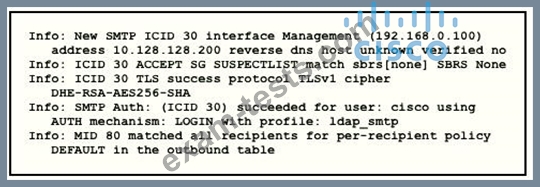
Explanation The TLS connections are recorded in the mail logs, along with other significant actions that are related to messages, such as filter actions, anti-virus and anti-spam verdicts, and delivery attempts. If there is a successful TLS connection, there will be a TLS success entry in the mail logs. Likewise, a failed TLS connection produces a TLS failed entry. If a message does not have an associated TLS entry in the log file, that message was not delivered over a TLS connection. Reference: https://www.cisco.com/c/en/us/support/docs/security/email-security-appliance/118844-technoteesa-00.html The exhibit in this Qshows a successful TLS connection from the remote host (reception) in the mail log.
The TLS connections are recorded in the mail logs, along with other significant actions that are related to messages, such as filter actions, anti-virus and anti-spam verdicts, and delivery attempts. If there is a successful TLS connection, there will be a TLS success entry in the mail logs. Likewise, a failed TLS connection produces a TLS failed entry. If a message does not have an associated TLS entry in the log file, that message was not delivered over a TLS connection.
Reference:
Explanation The TLS connections are recorded in the mail logs, along with other significant actions that are related to messages, such as filter actions, anti-virus and anti-spam verdicts, and delivery attempts. If there is a successful TLS connection, there will be a TLS success entry in the mail logs. Likewise, a failed TLS connection produces a TLS failed entry. If a message does not have an associated TLS entry in the log file, that message was not delivered over a TLS connection. Reference: https://www.cisco.com/c/en/us/support/docs/security/email-security-appliance/118844-technoteesa-00.html The exhibit in this Qshows a successful TLS connection from the remote host (reception) in the mail log.