

Question 31
You have an Azure subscription named Subscription1.
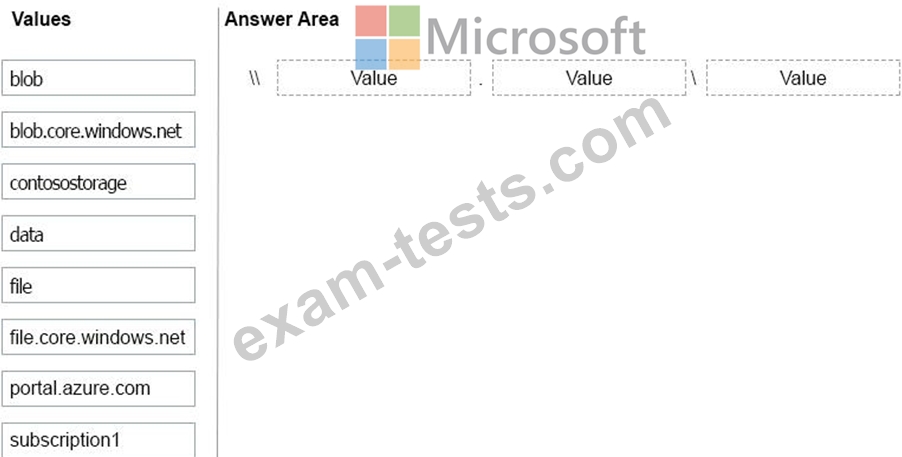
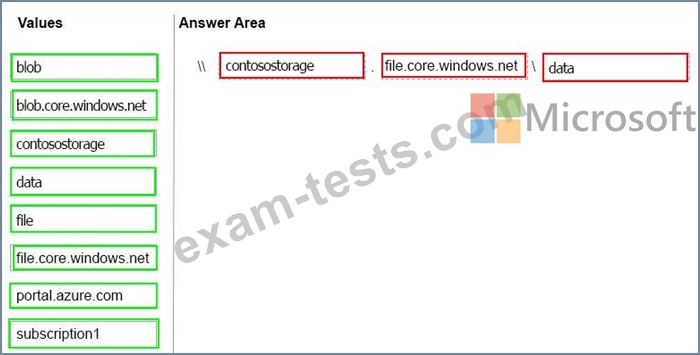
You create an Azure Storage account named contosostorage, and then you create a file share named data.
Which UNC path should you include in a script that references files from the data file share? To answer, drag the appropriate values to the correct targets. Each value may be used once, more than once, or not at all. You may need to drag the split bar between panes or scroll to view content.
NOTE: Each correct selection is worth one point.
You create an Azure Storage account named contosostorage, and then you create a file share named data.
Which UNC path should you include in a script that references files from the data file share? To answer, drag the appropriate values to the correct targets. Each value may be used once, more than once, or not at all. You may need to drag the split bar between panes or scroll to view content.
NOTE: Each correct selection is worth one point.
Question 32
Your network contains an on-premises Active Directory forest named contoso.com that contains two domains named contoso.com and east.contoso.com.
The forest contains the users shown in the following table.
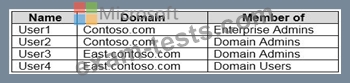
You plan to sync east.contoso.com to an Azure Active Directory (Azure AD) tenant by using Azure AD Connect.
You need to select an account for Azure AD Connect to use to connect to the forest.
Which account should you select?
The forest contains the users shown in the following table.
You plan to sync east.contoso.com to an Azure Active Directory (Azure AD) tenant by using Azure AD Connect.
You need to select an account for Azure AD Connect to use to connect to the forest.
Which account should you select?
Question 33
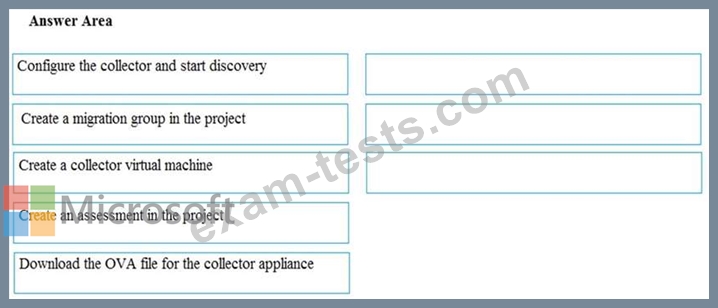
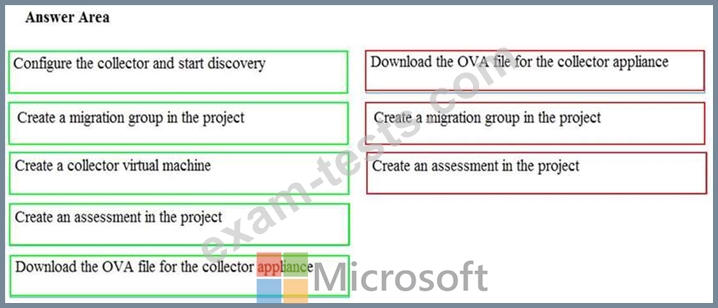
You create an Azure Migrate project named TestMig in a resource group named test-migration.
You need to discover which on-premises virtual machines to assess for migration.
Which three actions should you perform in sequence? To answer, select the appropriate actions from the list of actions to the answer area and arrange them in the correct order.
You need to discover which on-premises virtual machines to assess for migration.
Which three actions should you perform in sequence? To answer, select the appropriate actions from the list of actions to the answer area and arrange them in the correct order.
Question 34
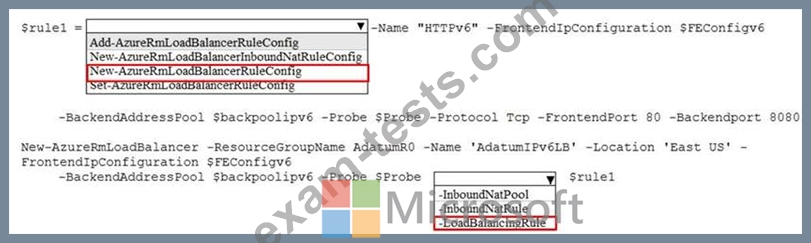
You are creating an Azure load balancer.
You need to add an IPv6 load balancing rule to the load balancer.
How should you complete the Azure PowerShell script? To answer, select the appropriate options in the answer area.
NOTE: Each correct selection is worth one point.
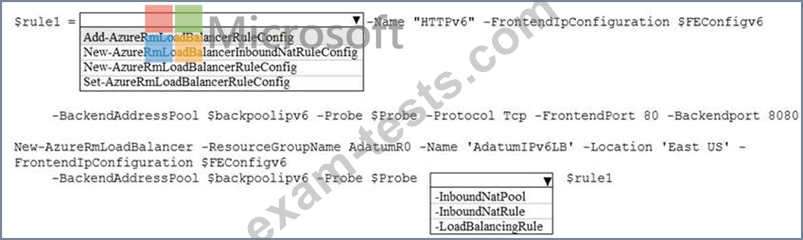
You need to add an IPv6 load balancing rule to the load balancer.
How should you complete the Azure PowerShell script? To answer, select the appropriate options in the answer area.
NOTE: Each correct selection is worth one point.
Question 35
Note: This question is part of a series of questions that present the same scenario. Each question in the series contains a unique solution that might meet the stated goals. Some question sets might have more than one correct solution, while others might not have a correct solution.
After you answer a question in this section, you will NOT be able to return to it. As a result, these questions will not appear in the review screen.
You have an Azure subscription that contains the virtual machines shown in the following table.

You deploy a load balancer that has the following configurations:
* Name: LB1
* Type: Internal
* SKU: Standard
* Virtual network: VNET1
You need to ensure that you can add VM1 and VM2 to the backend pool of LB1.
Solution: You create two Standard public IP addresses and associate a Standard SKU public IP address to the network interface of each virtual machine.
Does this meet the goal?
After you answer a question in this section, you will NOT be able to return to it. As a result, these questions will not appear in the review screen.
You have an Azure subscription that contains the virtual machines shown in the following table.
You deploy a load balancer that has the following configurations:
* Name: LB1
* Type: Internal
* SKU: Standard
* Virtual network: VNET1
You need to ensure that you can add VM1 and VM2 to the backend pool of LB1.
Solution: You create two Standard public IP addresses and associate a Standard SKU public IP address to the network interface of each virtual machine.
Does this meet the goal?