

Question 106
A company is located in a single country. The company manufactures electrical goods for export and for sale in its home country. When exporting, it invoices in its customers' currency. What currency risks is the company exposed to?
Question 107
A company's current earnings before interest and taxation are $5 million.
These are expected to remain constant for the forseeable future.
The company has 10 million shares in issue which currently trade at $3.60.
It also has a $10 million long term floating rate loan.
The current interest rate on this loan is 5%.
The company pays tax at 20%.
The company expects interest rates to increase next year to 6% and it's Price/Earnings (P/E) ratio to move to
9.5 times by the end of next year.
What percentage reduction in the share price will occur by the end of next year if the interest rate increase and the P/E movement both occur?
Question 108
A listed company plans to raise $350 million to finance a major expansion programme.
The cash flow projections for the programme are subject to considerable variability.
Brief details of the programme have been public knowledge for a few weeks.
The directors are considering two financing options, either a rights issue at a 20% discount to current share price or a long term bond.
The following data is relevant:
The company's share price has fallen by 5% over the past 3 months compared with a fall in the market of 3% over the same period.
The directors favour the bond option.
However, the Chief Accountant has provided arguments for a rights issue.
Which TWO of the following arguments in favour of a right issue are correct?
Question 109
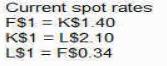
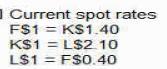
Which TWO of the following situations offer arbitrage opportunities?
A)

B)
C)
D)

A)
B)
C)
D)
Question 110
Company A is a large well-established listed entertainment company and Company B is a small unlisted company specializing in providing online media streaming.
Company A has a gearing ratio of 60% (using book values) and interest cover of 2.
Company A is considering making an offer for Company B, either a cash offer financial by raising additional debt finance or a share-for-share exchange.
Which of the following is most likely to occur if Company A offers a share-for exchange rather than offering cash finance by raising debt?