Question 1
You are carrying out an audit at a single-site organisation seeking certification to ISO 9001 for the first time.
The organization manufactures cosmetics for major retailers.
You are interviewing the Manufacturing Manager (MM).
You: "I would like to begin by looking at the cleaning controls."
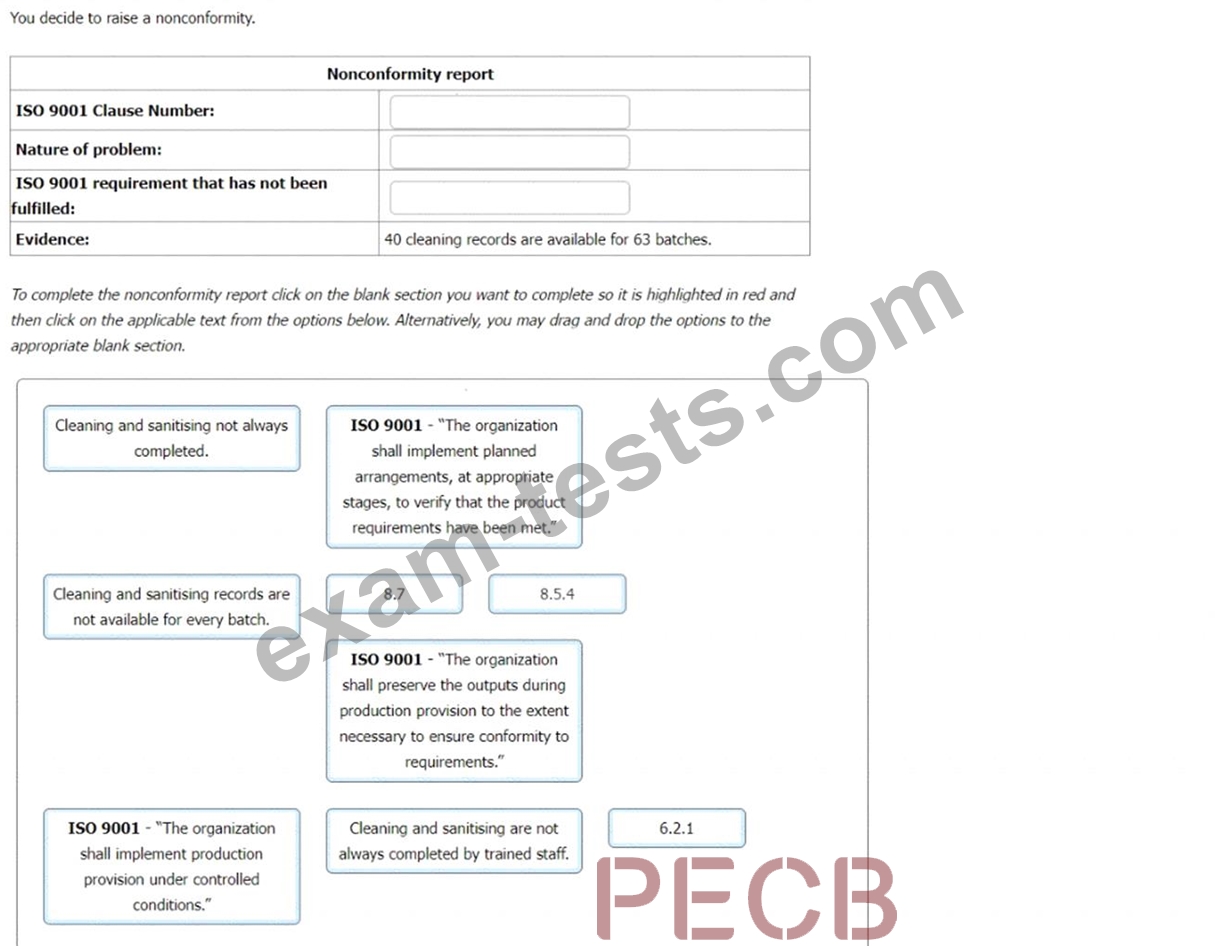
MM: "We record the cleaning of the equipment at the end of every batch. This document details the minimum cleaning frequency and the procedures to follow for all areas and each item of equipment. The person who carries out the cleaning puts their initial on the document and records the time and date alongside." Narrative: You sample production records over 3-days and note down evidence of nonconformity as per the table below.

The organization manufactures cosmetics for major retailers.
You are interviewing the Manufacturing Manager (MM).
You: "I would like to begin by looking at the cleaning controls."
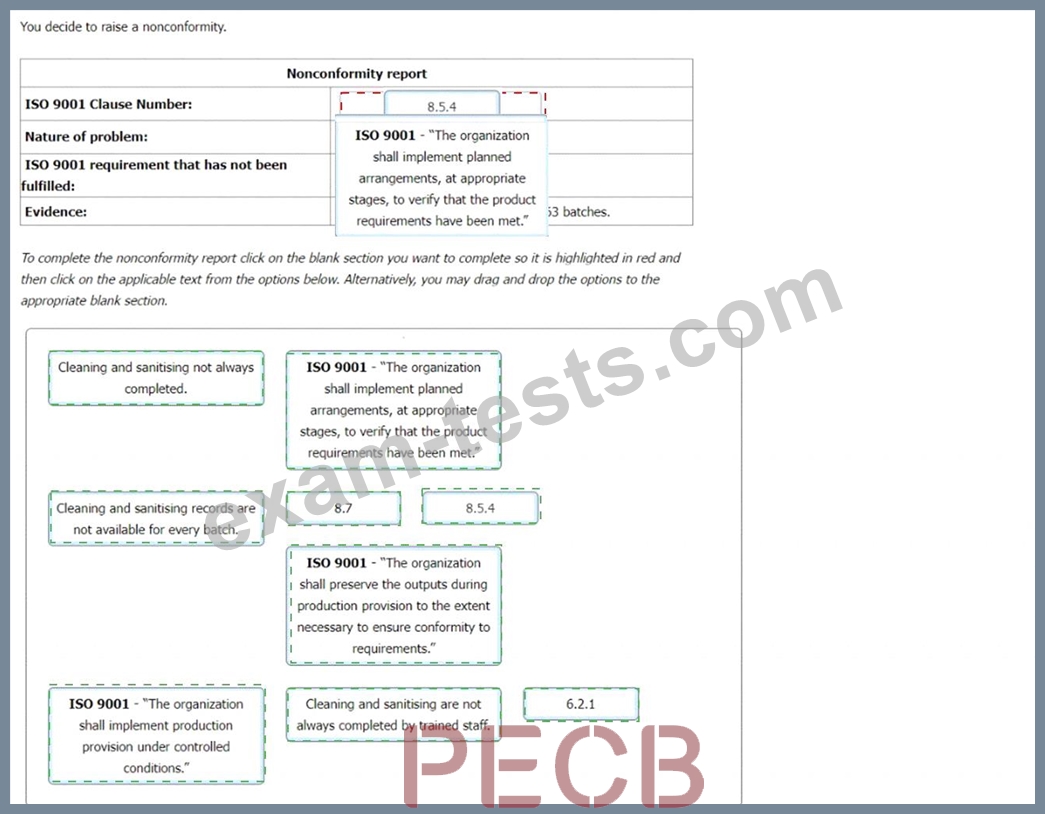
MM: "We record the cleaning of the equipment at the end of every batch. This document details the minimum cleaning frequency and the procedures to follow for all areas and each item of equipment. The person who carries out the cleaning puts their initial on the document and records the time and date alongside." Narrative: You sample production records over 3-days and note down evidence of nonconformity as per the table below.
Question 2
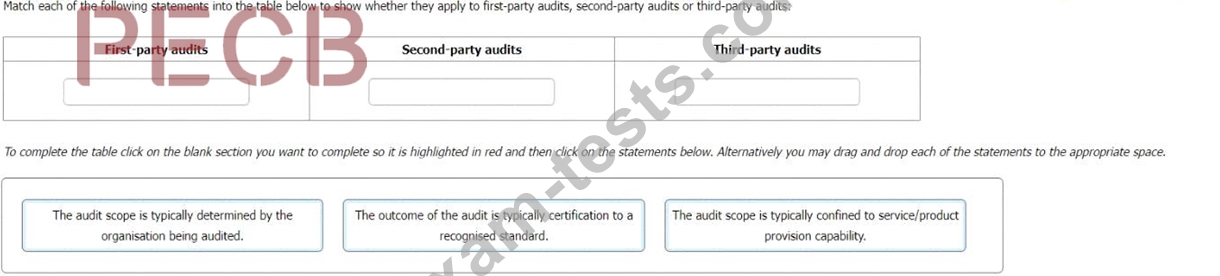
Match each of the following statements into the table below to show whether they apply to first-party audits, second-party audits or third-party audits:


Question 3
An internal auditor of a manufacturer of polystyrene packaging products for the electronics industry raised a nonconformity against section 10.3 of ISO 9001 in Report IA202. The nonconformity (NC 3) stated:
"The reject rate of the finished product of 9.7% needs improvement as it doesn't meet the stated objective of top management of 5%." As the third-party auditor reviewing the internal audit process, you come across the nonconformity. For corrective action, the Quality Manager conducted an investigation into the reject rates. He reported that the collection baskets for products ejecting from the moulding machines were not large enough. About 6% of products fell onto the wet and dirty factory floor. Management stated that replacing the baskets was too costly and ordered the Maintenance Manager to ensure that the floor was kept clean and dry to prevent rejects. The auditor later checked the factory floor, which was wet and dirty in places.
From the following nonconformities, select three that the auditor could raise to ISO 9001.
"The reject rate of the finished product of 9.7% needs improvement as it doesn't meet the stated objective of top management of 5%." As the third-party auditor reviewing the internal audit process, you come across the nonconformity. For corrective action, the Quality Manager conducted an investigation into the reject rates. He reported that the collection baskets for products ejecting from the moulding machines were not large enough. About 6% of products fell onto the wet and dirty factory floor. Management stated that replacing the baskets was too costly and ordered the Maintenance Manager to ensure that the floor was kept clean and dry to prevent rejects. The auditor later checked the factory floor, which was wet and dirty in places.
From the following nonconformities, select three that the auditor could raise to ISO 9001.
Question 4
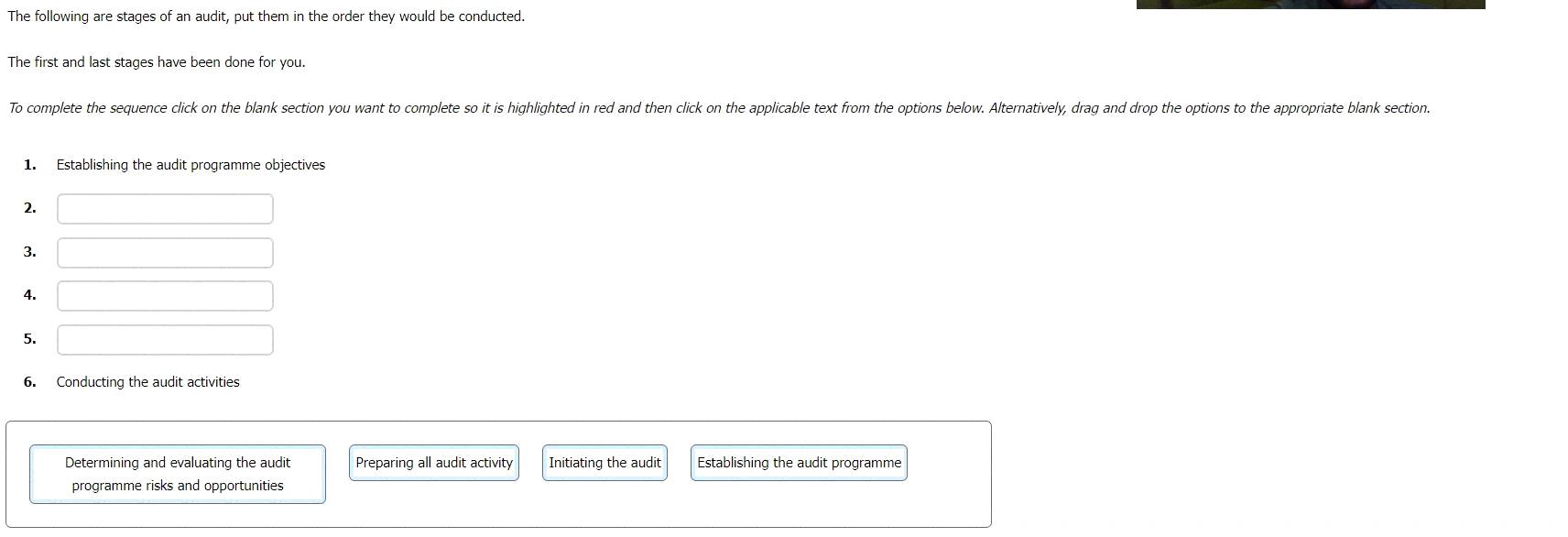
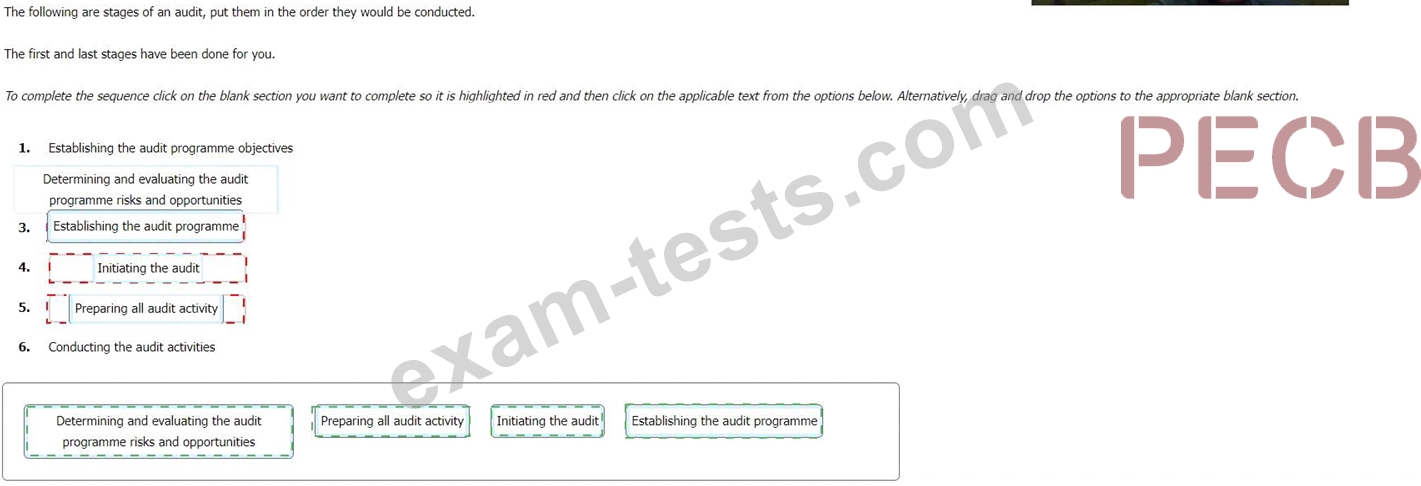
The following are stages of an audit, put them in the order they would be conducted.
Question 5
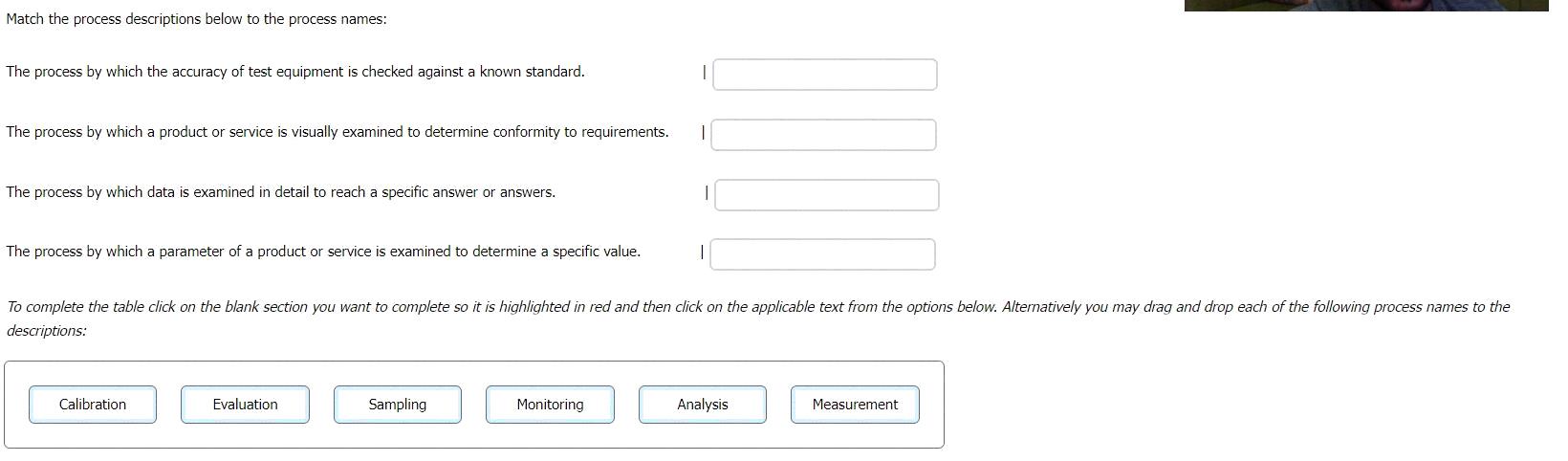
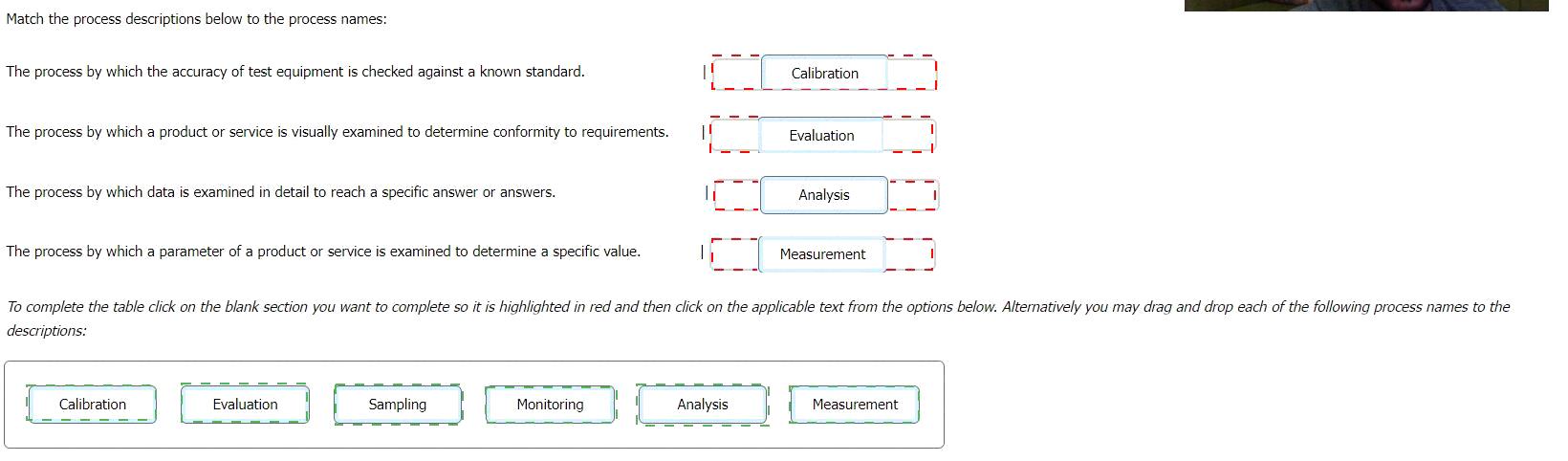
Match the process descriptions below to the process names: