

Question 46
A systems administrator is troubleshooting a connectivity issue pertaining to access to a system named db.example.com. The system IP address should be 192.168.20.88. The administrator issues the dig command and receives the following output:

The administrator runs grep db.example.com /etc/hosts and receives the following output:

Given this scenario, which of the following should the administrator do to address this issue?
The administrator runs grep db.example.com /etc/hosts and receives the following output:
Given this scenario, which of the following should the administrator do to address this issue?
Question 47
A Linux administrator is trying to start the database service on a Linux server but is not able to run it. The administrator executes a few commands and receives the following output:
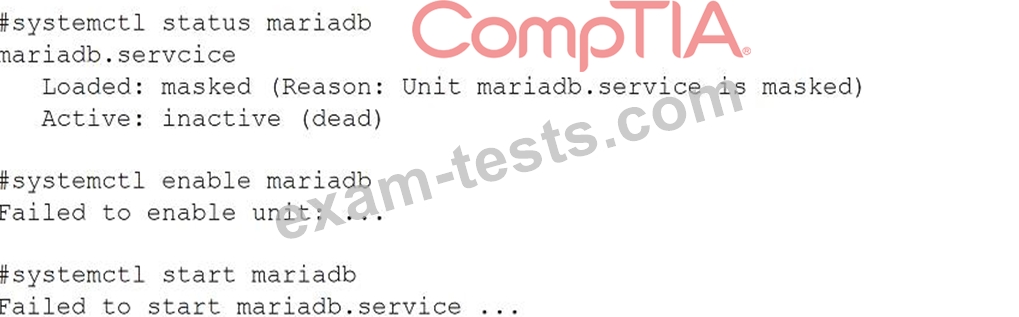
Which of the following should the administrator run to resolve this issue? (Select two).
Which of the following should the administrator run to resolve this issue? (Select two).
Question 48
While inspecting a recently compromised Linux system, the administrator identified a number of processes that should not have been running:

Which of the following commands should the administrator use to terminate all of the identified processes?
Which of the following commands should the administrator use to terminate all of the identified processes?
Question 49
A user is asking the systems administrator for assistance with writing a script to verify whether a file exists.
Given the following:
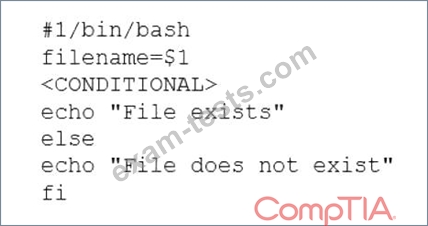
Which of the following commands should replace the <CONDITIONAL> string?
Given the following:
Which of the following commands should replace the <CONDITIONAL> string?
Question 50
A Linux administrator needs to expand a volume group using a new disk. Which of the following options presents the correct sequence of commands to accomplish the task?