

Question 1
A company's BIA indicates that any loss of more than one hour of data would be catastrophic to the business. Which of the following must be in place to meet this requirement?
Question 2
A security engineer discovers that some legacy systems are still in use or were not properly decommissioned. After further investigation, the engineer identifies that an unknown and potentially malicious server is also sending emails on behalf of the company.
The security engineer extracts the following data for review:

Which of the following actions should the security engineer take next? (Choose two.)
The security engineer extracts the following data for review:
Which of the following actions should the security engineer take next? (Choose two.)
Question 3
Due to an infrastructure optimization plan, a company has moved from a unified architecture to a federated architecture divided by region. Long-term employees now have a better experience, but new employees are experiencing major performance issues when traveling between regions. The company is reviewing the following information:
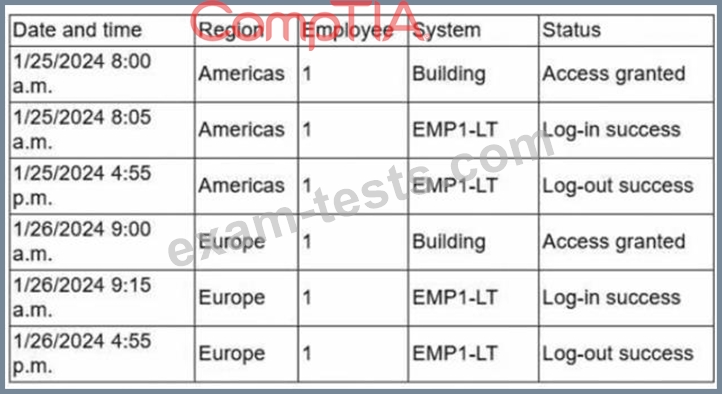
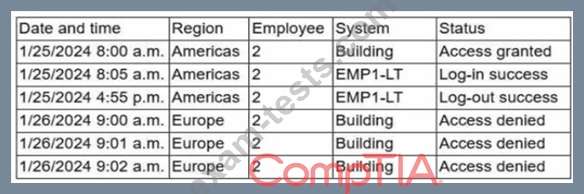
Which of the following is the most effective action to remediate the issue?
Which of the following is the most effective action to remediate the issue?
Question 4
An administrator brings the company's fleet of mobile devices into its PKI in order to align device WLAN NAC configurations with existing workstations and laptops. Thousands of devices need to be reconfigured in a cost-effective, time-efficient, and secure manner. Which of the following actions best achieve this goal? (Select two)
Question 5
A security engineer receives the following findings from a recent security audit:
* Data should be protected based on user permissions and roles.
* User action tracking should be implemented across the network.
* Digital identities should be validated across the data access workflow.
Which of the following is the first action the engineer should take to address the findings?
* Data should be protected based on user permissions and roles.
* User action tracking should be implemented across the network.
* Digital identities should be validated across the data access workflow.
Which of the following is the first action the engineer should take to address the findings?