

Question 6
You are running a Deployment for a database service with 3 replicas. You want to ensure that only one pod is updated at a time, but you need to guarantee that the database service remains available throughout tne update process. How would you configure the Deployment to achieve this?

Question 7
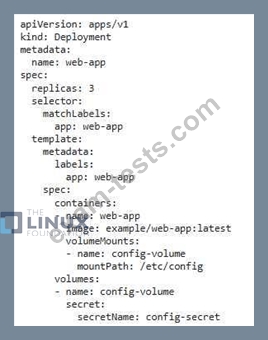
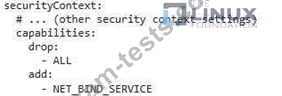
You are working on a Kubernetes cluster where you have a Deployment named 'web-app' running an application. The application has a sensitive configuration file named 'config.jsons that is mounted as a volume to each pod. You need to ensure that this configuration file is not accessible by any user or process running within the pod, except for the application itselt Describe how you would implement this security best practice, using specific Kubernetes configurations, to protect the sensitivity of the 'config.json' file.

Question 8
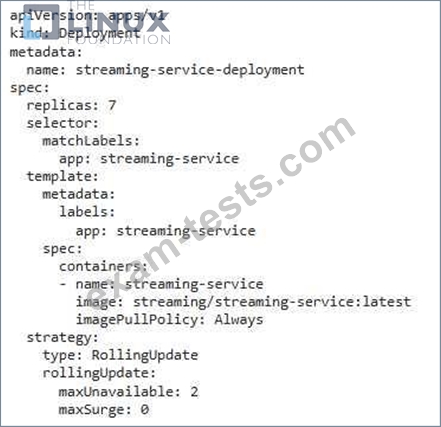
You are deploying a new application named 'streaming-services that requires 7 replicas. You want to implement a rolling update strategy that allows for a maximum of two pods to be unavailable at any given time. However, you need to ensure that the update process is triggered automatically whenever a new image is pusned to the Docker Hub repository 'streaming/streaming-service:latest'.
Question 9
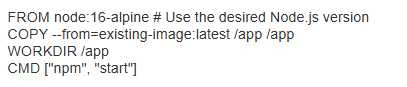
You have a Deployment running a web application built With a Node.js container. The application currently uses an older version of the Node.js runtime, and you need to upgrade to a newer versiom Describe the steps involved in modifying the container image to include the new Node.js runtime without rebuilding the entire application.

Question 10
You are developing a microservices application and want to deploy it to Kubernetes using Helm. You have two services: 'user-service and 'order-service. The 'order-service depends on the "user-service'. How would you use Helm to manage these deployments, ensuring that the 'order- service' only starts after the 'user-service' is successfully deployed and running?
